

Tongue and Lip Tie Collaborative Care in Midland, TX
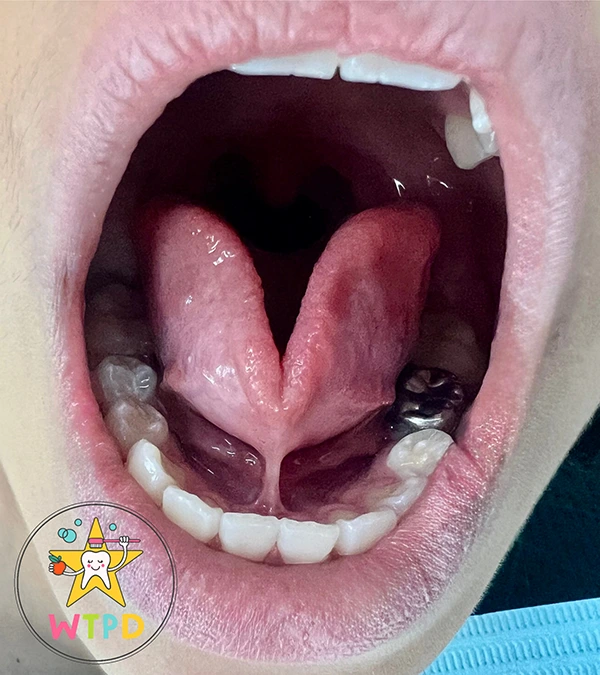
Led by Dr. Archana Gutta, our specialized team of Pediatric Dentistry, IBCLC and SLP, we focus on identifying whether a tight, restrictive frenulum is the root cause of your child’s discomfort, feeding struggles, or speech delays in Midland TX. Our goal is to provide a gentle solution that improves your child's daily development and brings immediate relief to your family.
Signs Your Child Needs an Evaluation
Not every tongue or lip tie requires treatment; some children have visible restrictions but feed and grow normally. An evaluation is recommended if daily challenges arise.
Babies
- Difficulty latching or staying latched during breast or bottle feeding.
- Clicking or smacking sounds while nursing.
- Long, exhausting feeds with poor milk transfer.
- Fussiness, gas, or colic after feeds.
- Difficulty lifting or extending the tongue past the gums.
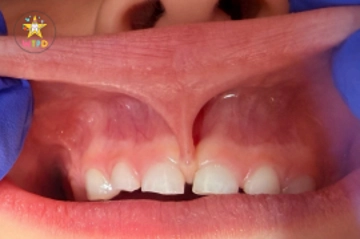
- Blistered or tucked-in upper lip.
- For nursing mothers: severe pain, bleeding, or flattened nipples after feeding may indicate a restricted latch.
Older Children
- Unclear speech or difficulty articulating sounds.
- Chronic mouth breathing or sleeping with the mouth open.
- Difficulty licking their lips or eating from a spoon.
- Visible tension in the jaw or neck.
Benefits of Tongue and Lip Tie Release in Midland TX
- Treatment may help when a restrictive frenulum affects feeding or oral movement.
- Deeper, more secure, and comfortable latch.
- Easier, more efficient milk transfer and shorter feeding sessions.
- Less air swallowing, which may reduce gas and reflux.
- Improved tongue placement for clearer speech development.
- Infants may feed more calmly, stay full longer, and sleep better.
- Older children may have improved tongue mobility for speaking and chewing.
Healing After Treatment
Children generally recover quickly after tongue or lip tie release. The first few days focus on comfort, feeding, and adjusting to new tongue movement.
- Follow gentle stretching exercises as directed to help prevent reattachment.
- Continue feeding on demand to help your baby practice their new latch.
- Monitor healing closely during the first week.
- Attend a follow-up visit to check healing and progress.
- Some babies improve their latch immediately, while others need time to adjust to their new range of motion.
Why early treatment matters
- Tongue movement plays an important role in feeding, swallowing, facial growth, airway development, and oral development.
- A restricted tongue may cause children to compensate with altered swallowing patterns or improper tongue positioning.
- Over time, these compensations may contribute to orthodontic concerns, speech difficulties, or sleep-breathing problems.
- Early treatment can help remove the physical restriction while your child is still developing.
- For many families, treatment can make feeding easier and more comfortable during the early months.
OFFICE HOURS
Monday
8:00am - 4:00pm
Tuesday
8:00am - 4:00pm
Wednesday
8:00am - 4:00pm
Thursday
8:00am - 4:00pm
Friday
8:00am - 1:00pm
Saturday & Sunday
Closed

West Texas Pediatric Dentistry
3306 Andrews Hwy
Midland, TX 79703